 |
 |
 |
 |
 |
 |
 |
 |
 Archived Newsletters Archived Newsletters |
 |
 |
| Email: info@psq.co.za Phone: 021 557 2491 
Subscribe to our Newsletters |
 |
| Newsletter |
Blockchain and other digital platforms are opening up complex supply chains in agriculture, but without involvement at every level there are limitations to their success.
Blockchain in agriculture is a reaction to our growing demand for ethical products that have been sourced sustainably and from farmers who have been paid a fair market price.
But agricultural supply chains are complicated beasts, often operating in their own small silos. This can obscure supply chain transparency and thwart access to sound, reliable information, leaving smallholders marginalised and unable to get the resources they need.
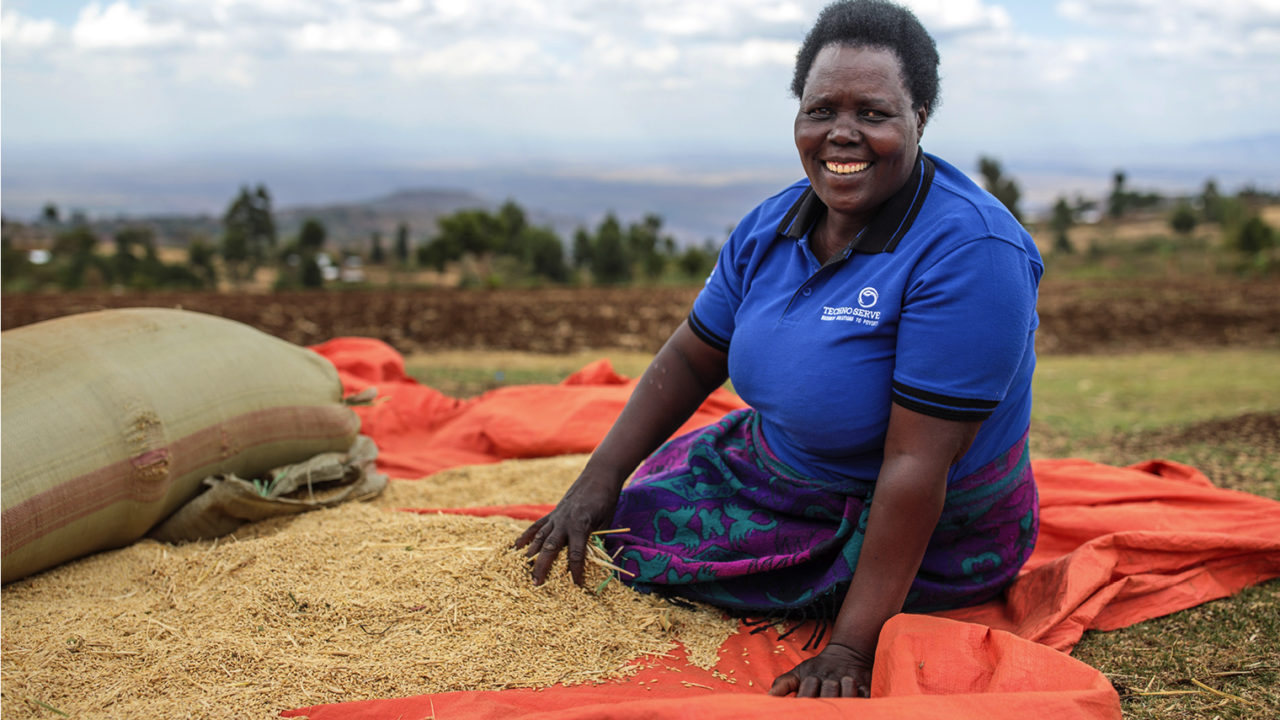
Lack of supply chain transparency leads to underpaid producers
“The global food chain is a complex network extending from farmers to processors, to transport companies, to distribution centres, to grocery stores,” says Eric Somitsch, senior director of solutions for consumer products and agribusiness, at software provider SAP.
“Before food reaches our plates, it has often travelled halfway around the world and been touched by many intermediaries. Therefore, providing supply chain transparency from farm to consumer is difficult to achieve and without transparency it is hard to get people to trust the system; this is where blockchain can help.”
When AB InBev, the world’s largest brewer, started looking at its supply chain transparency in Africa, they began talking to local farmers. “We quickly realised they weren’t getting the prices that we thought they were,” says Katie Hoard, global director of agricultural innovation and sustainability. Corruption and too many middlemen were taking their toll on the money that farmers were actually banking.
To tackle the problem, AB InBev linked up with technology company BanQu to launch a simple mobile app based around blockchain, which offers farmers a secure, immutable platform that records their transactions.
Importantly, explains BanQu co-founder Ashish Gadnis, the system creates an economic identity and transaction history, making it easier for farmers to deal with banks and other financial institutions. “When the farmer says ‘I exist in the AB InBev supply chain’, they become bankable,” he says.
Currently, more than 20,000 barley and sorghum farmers in Uganda have been added to the platform, along with a further 2,000 cassava farmers in Zambia.
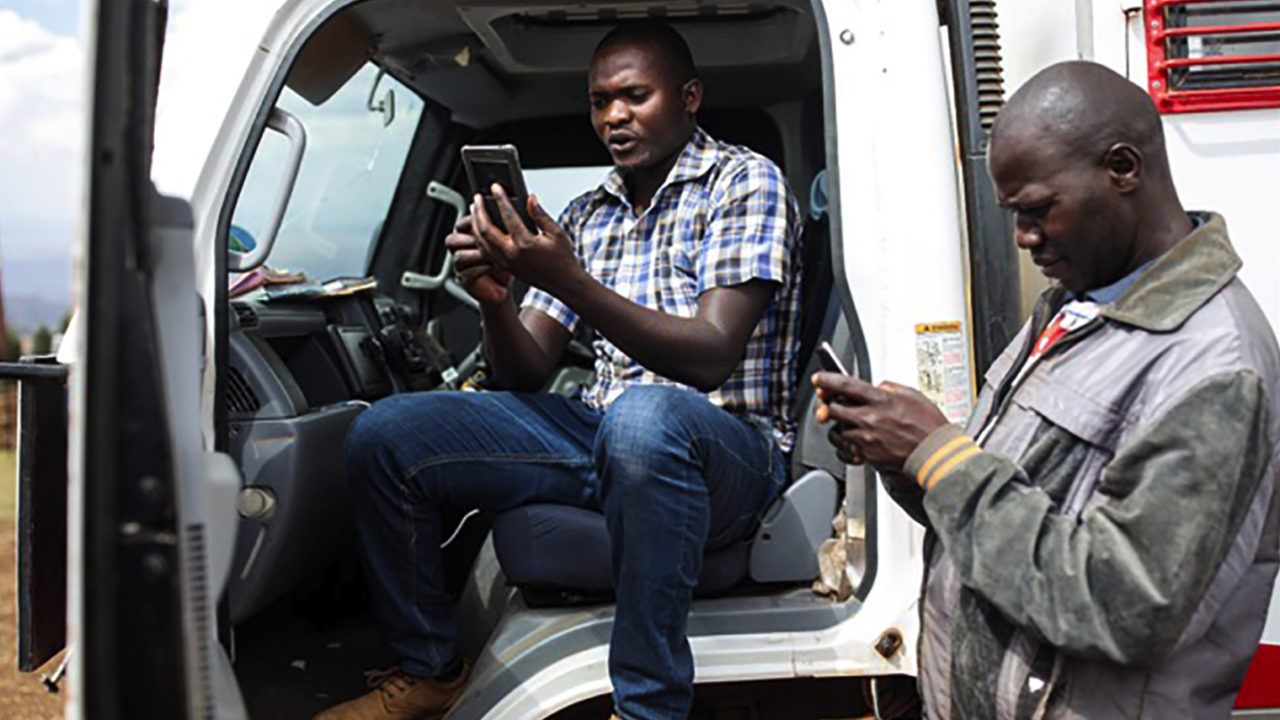
How blockchain is improving supply chain transparency
Blockchain brings very practical benefits too, adds Ms Hoard, who recently spoke to a farmer in Uganda whose paper receipt for barley sold, the only proof she had of the crops she produced, was destroyed in a torrential downpour. “With blockchain there is always an electronic receipt sitting on her cell phone,” says Ms Hoard.
But blockchain is
only one piece of the puzzle, says Mr Gadnis, and other farmer-centric
platforms have an important role to play in ensuring the long-term
viability of supply chains.
Olam is one of the
world’s largest agri-businesses, with supply chains covering a range of
commodities from cashew to cotton. Last year the company launched
AtSource, a non-blockchain technology which is also designed to improve
supply chain transparency and farmers’ livelihoods, says Siddharth
Satpute, programme director of Olam International’s digital task force.
It tracks the
environmental and social impact of a product at each stage of its
journey, helping Olam to provide its customers with the data they need
to measure their own sustainability committments.
“More data and insights means better targeted, and therefore more efficient, sustainability programmes,” says Mr Satpute. “In turn, this means faster change for farmers to improve livelihoods and better protection of natural resources, resulting in more resilient supply chains.”
Agriculture technology must exist within a wider frameworkHowever, Chris Isaac, managing director of AgDevCo, offers a word of warning. "Mobile agtech is a powerful tool for reaching farmers but, unless it is part of a wider ecosystem, it is likely to disappoint,” he says.
AgDevCo is an impact investor, funded by the UK Department for International Development, working with small agri-businesses across Africa and helping them connect with smallholder farmers.
“There’s a lot of excitement about mobile agtech solutions, but they can’t help smallholder farmers in a vacuum,” he says. “You need the local processor or aggregator, who engages with farmers on the ground and acts as the link to international markets.”
In Mozambique, for example, AgDevCo works with Moz-Agri, a business which buys goats from thousands of farmers and is introducing a digital traceability system using electronic ear tags. Elsewhere, in Malawi, AgDevCo is helping Jacoma, a macadamia nut processor, to roll out a system to register hundreds of growers. They can then build a database to support traceability and supply chain transparency, help with training and inputs distribution, and better monitor farmers’ yields and incomes.
Mr Isaac concludes: “Digitisation gives a direct channel to the farmers that potentially cuts out some of the middle men. It allows you to get better information on where some of the stuff is coming from and that, potentially, allows you to pay better prices because you know that farmer is giving you a quality product. Long term, this is surely the direction things are heading for many commodities.”
Three companies shaking up agriculture
1. Moyee CoffeeEthiopian-Dutch company Moyee Coffee is using blockchain to improve traceability, as well as allowing buyers to deal directly with farmers, cutting out the go-betweeners and ensuring growers receive a bigger piece of the profits. Buyers can access profiles of the farmers they work with, see exactly how much they are being paid and even help to fund new planting projects.
2. Honey Flow
Nigerian-based Honey Flow is bringing internet of things technology to beekeeping, with sensors that monitor the temperature, humidity and noise within the hive, factors which can have a huge impact on the productivity of the bees. The system can help beekeepers maintain optimal conditions, preventing bees from swarming and avoiding the financial impact of a deserted hive.
3. Aerobotics
South African business Aerobotics uses drone technology to help with the early detection and identification of pests and disease in orchards and vineyards. The airborne reconnaissance is sent to the farmer’s smartphone, enabling them to pinpoint problems on a tree-by-tree basis.
Mark Hillsdon is a contributor to The Guardian, BBC Countryfile, and BBC Wildlife magazines, among others, he writes on a range of subjects from sustainability to sport and health to wildlife.