 |
 |
 |
 |
 |
 |
 |
 Archived Newsletters Archived Newsletters |
 |
 |
| Email: info@psq.co.za Phone: 021 557 2491
|

|
|
|
Newsletter |
by Steven A Melnyk PhD and Colin M Seftel BSc(Eng) CFPIM CSCP
In a recent survey of supply chain issues (Deloitte, 2015; CIO Journal, 2015), Deloitte noted that the major concern facing the executives that it surveyed was the lack of adequate supply chain talent. It was noted that only 38 percent of the supply chain executives were confident that they had the required competencies today. However, when asked about their needs five years from now, only 44 percent felt confident that they would have the skills required. On one hand, this finding emphasizes the fact that there is a supply chain talent crisis – a fact that most supply chain managers are only too painfully aware of. Yet, what is more important is not the numbers but the nature of the skills to be required in the future.
As can be expected, being technologically suave was seen as being important (i.e., be able to understand and integrate the technological capabilities offered by such developments as big data analytics, 3D printing, artificial intelligence, and wearable technology), the most important management skill and the one that causes the greatest amount of concern is that of critical thinking and problem solving (Figure 1).
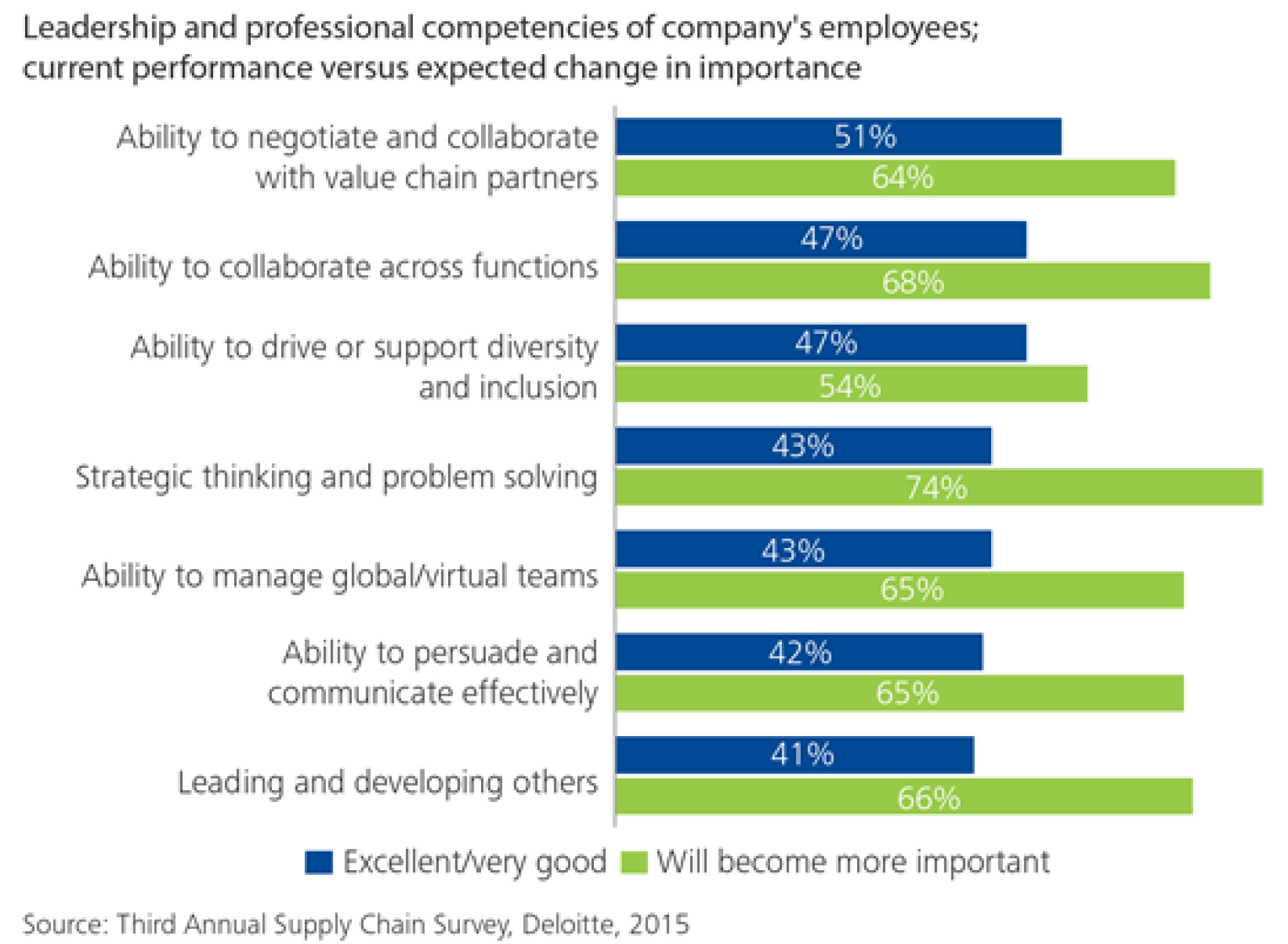
Figure 1: Wanted: Leadership Capabilities
This finding leads to three major and critical conclusions:- The supply chain is changing – metamorphosing from a tactical entity that is often seen as more risk than benefit – a necessary evil where the “best” supply chain is the one that you never hear of, to being seen as a strategic capability that enables and enhances the ability of the firm to gain a significant competitive advantage in the marketplace.
- The existing supply chain manager is not up to the task of managing or tapping into the promise of this new supply chain.
- A new type of leader is needed to manage this new supply chain.
In this article, we intend to expand on the three major conclusions previously presented. We will examine how the supply chain is changing (and the factors that are causing this change). We will look at why the current supply chain managers will have difficulties in meeting the challenges and demands created by this new supply chain. Finally, we explore the skills and capabilities demanded for the new supply chain manager – requirements that transform the supply chain manager of today into the supply chain leader of tomorrow! As part of this final discussion, we will discuss the challenges facing firms, educational institutions (e.g., universities) and professional societies as they struggle to develop this new generation of strategic leaders. However, before we discuss the challenge of creating the leaders of tomorrow, we must begin by understanding the changes now taking place in the supply chain.
The Emergence of the “New” Supply Chain
Since the term was first introduced in 1982 in the Financial Times, the supply chain and how it is perceived both within supply chain management and by others within the firm has greatly changed. Initially, many managers outside of the supply chain saw supply chain as something very tactical, consisting of terms such as planning horizons, capacity, advanced delivery notices, and Lean. At the heart of supply chain was a combination of boxes, trucks, factories, and shipping orders. Many CEOs and others first became aware of the supply chain when they learned about supply chain disruptions. They found out that supply chain disruptions can and did hurt the firm both operationally and strategically. Thanks in a large part to academic research, they learned that when there was a supply chain disruption, the affected firm’s stock price dropped about 40% and that it took about two years for the stock price to recover. This led to an interesting phenomenon – the attractiveness of the “invisible” supply chain – that is, since the only time that you ever heard about a supply chain is when something went wrong, the “best” supply chain was therefore the one that you never heard about. Yet, that view is changing and it is changing radically.Managers and corporate leaders are starting to recognize the strategic value and importance of the supply chain. This change can be attributed to the following factors:
- Increasing rate of technological advances that are rooted in the supply chain. In today’s media, we are reading about developments such as the Internet of Things (IoT), 3D printing, big data analytics, and autonomous vehicles (self-driving trucks and cars). The most significant impact of many of these developments is on the supply chain. For example, Pirelli has introduced sensors into truck tires. These sensors have helped Pirelli learn more about the durability and performance of their products (ultimately helping Pirelli to design better tires); they have enabled Pirelli to help their customers by offering them the capabilities for better vehicle protection and control. This new technology is changing how firms not only design and build products, but also how they interact with customers and deliver products. For example, Amazon is now experimenting with 3D printing on trucks so that goods can be built as they are being delivered to their customers; M-Tailor draws on improved cell phone photographic power to help its customers design, make and deliver shirts specifically configured to their unique physical characteristics.
- Acceptance of complexity as a business driver. In the past, complexity was viewed as something that added cost and as something that had to be avoided. Now, we recognize that the demand for complexity is being driven by our customers. If the firm wants something done in a unique way and is willing to pay for it, then the firm needs to deliver. The firm can make the customer aware of the hidden costs and dangers but ultimately, it needs to deliver. In part, the ability of the supply chain to deal with this increased demand for complexity is being enhanced by the new technologies discussed in the preceding section.
- New competitive pressures. Firms are now recognizing that how they serve and interact with their customers is being influenced by the experiences of their customers with other providers. One such provider is Amazon, and this has given rise to the Amazon Effect – the impact exerted on both customers and firms by Amazon’s relentless emphasis on developing and quickly implementing new and different ways of connecting customers with solutions. As customers work with Amazon, they come to expect that other providers will offer the same level of service. For example, at the Strategic Supply Chain Summit held in Chicago, IL in November 2105, a supplier of industrial equipment described how this effect had impacted their firm. The customer, when told that there would be no customer service over weekends, threatened to pull out of negotiations. When asked why such support was so important, they simply noted that this was the type of support they received from Amazon and if Amazon could do it, then they, the equipment supplier, should also. Dealing with the Amazon effect often requires changes to the supply chain.
- New methods of dealing with customers. Increasingly, customers, irrespective of whether they are B2B (business to business) or B2C (business to customers) are demanding that they be able to place orders and find information through various means – so-called brick and mortar, on-line, or through smart phone apps. This has led to the emergence of omnichannel. To a large extent, the challenge of delivering the omnichannel experience has fallen on the supply chain. Success and/or failure in the omnichannel depends on the supply chain system and its leadership.
- Recognition that cost is no longer enough. Traditionally, the primary focus of the supply chain has been on one competitive driver – costs. Lowest cost was often held as the primary indicator of supply chain performance. That view is now changing. As noted by Melnyk, Davis, Spekman and Sandor (2010), supply chains can achieve more than simply cost reductions; they can offer improved security, innovation, responsiveness, sustainability, resilience, and quality. These other outcomes are attractive and can offer important competitive advantages. To understand the value of these other outcomes, consider the impact of Zara, the fast fashion producer. Zara has become a fashion powerhouse in the marketplace by emphasizing responsiveness at a time when its competitors were focusing on cost (and consequently outsourcing to low cost countries such as China).
- Customer demands for greater supply chain visibility. Customers, especially in North America and Europe, want assurances that their products are being produced safely and without adverse impact. Companies such as Disney now recognize that they are accountable for actions taken anywhere in their supply chain, whether it is at the first tier or the fourth tier. That is one reason why in 2013, Disney announced that it was pulling production out of Bangladesh, Pakistan, Ecuador, Venezuela, and Belarus due to concerns over safety standards for workers in the supply chains located in these countries.
- Deliver goods and services faster, better, cheaper (the lowest form of competitive advantage)
- Enable the firm to address customer needs currently being met poorly
- Enable the firm to address customer needs currently not being met (highest form of advantage)
The “Traditional” Supply Chain Leader
The challenge, however, is that the many of the current supply chain managers who are in leadership positions are not prepared to deal with and harness the capabilities of this new supply chain. In part, this is because they have largely not been formally trained in supply chain management. More importantly, these problems can be traced to their functional orientations and preparation – preparations that have imparted in them the following traits:- Strong functional orientation. These are managers who feel most comfortable working with other similar people. Interactions with other functions are handled through hand-offs, best described as “over the wall” – decisions made and then handed off to other groups will little or no input from them.
- Strongly cost focused – cost is seen as the universal benchmark and mark of quality. It has resulted in such developments as one major farm equipment manufacturer who had implemented a world class lean/Just-in-Time system in its supply chain – the goal – drive down cost. Unfortunately, this focus adversely affected its ability to be responsive during a time when demand was greatly changing (thus hurting the company’s competitive position in the short term).
- Strives for supply chain excellence. Tries to make the supply chain best in terms of such measures as costs. Such assessments may not necessarily result in better overall corporate performance.
- Execution oriented – their objective is seen as implementing decisions made elsewhere in the firm.
- Speaks a language that is very functionally oriented – a language that talks in terms of capacity, throughput, bottlenecks, inventory, ppm. This language hinders the ability of current supply chain managers to effectively interface with the other functions of the firm and with top management.
- Strives to simplify where possible and to avoid complexity. Complexity is seen as something that adds cost and lead time; consequently it must be avoided and resisted whenever possible.
- Deliberate decision-making – it takes time to plan out the decisions. Haste makes waste.
- Optimal solutions are the best – there is something “optimal” about an optimal solution.
- Stability and certainty highly prized and valued.
- Toolsmiths. That is, many current supply chain leaders are well grounded in solutions that they can readily and quickly apply to any situation or problem. They are masters of developments such as ERP, MRP, DDMRP, Six Sigma, Total Quality Management (TQM), Theory of Constraints (TOC), and Lean/Just-in-time.
The Emerging Supply Chain Leader – Strategic in Focus; Outside/In in Orientation
The emerging supply chain leader – the one that we encountered in the Beyond the Horizon Project and the one hinted at in the Deloittee supply chain survey has a very different set of skills and orientations, namely:- Excels at managing at the interfaces. That is, the new supply chain leaders recognize that they must work with other functions within the firm. Specifically, they must be prepared to engage with groups such as engineering, marketing, finance, accounting and top management. This engagement is bi-directional. On one hand, they need to understand the requirements and needs of these other groups since these needs have to be translated into capabilities that the supply chain must provide. On the other hand, the new supply chain leader must be prepared to educate these other groups on the capabilities of the supply chain – what the supply chain can do well and what it cannot do well. They must also be able to communicate how actions taken by these other groups affect the supply chain and its performance. For example, they must be to show how promotions can adversely affect the ability of the supply chain to ensure that there is adequate stock on the shelf once the promotion becomes active. If change in supply chain capabilities is required, then it is the responsibility of the new supply chain leader to communicate to the other areas how long it will take and the costs required. In other words, the new supply chain leader must excel at educating, informing, and coordinating.
- Focus on asking the “right” question, rather than being focused on the “right” solution. This is where critical thinking shines. As Charles F. Kettering, the brilliant designer and engineer at General Motors, once stated, “a problem well stated is a problem half solved.” Here, the supply chain leader is more interested in ensuring that there is a clear and concise understanding of the desired outcome, rather than focusing on a specific solution. This means ensuring that everyone understands what the goal is, then soliciting the input of the various members of the supply chain to identify how best to achieve this goal. The solution then becomes secondary to the desired outcome in that it is driven by this outcome.
-
Strives
for business excellence, rather than supply chain excellence.
Here, the goal is to help the firm better compete at the business
model rather than the supply chain level. The business model, which
can be viewed as a highly operational restatement of the strategy
(see Figure 2), identifies three critical components that must be
consistently maintained in alignment for the firm to compete:
- The key customer. The ultimate judge of what we produce. Here, we must identify who it is that we are specifically targeting – whose needs we will try to profitably satisfy.
- The value proposition. What it is that the firm offers the key customers to attract them.
- Capabilities. The resources, skills, processes, and assets that the firm draws on to deliver the value proposition that is both attractive to and accepted by the key customers. It is here that the supply chain resides, along with corporate processes, measurement, capacity, and corporate culture. The new supply chain leader understands that it is their task to ensure that what the key customers want and expect, what the firm has promised, and what the supply chain can deliver are continuously in alignment over time.
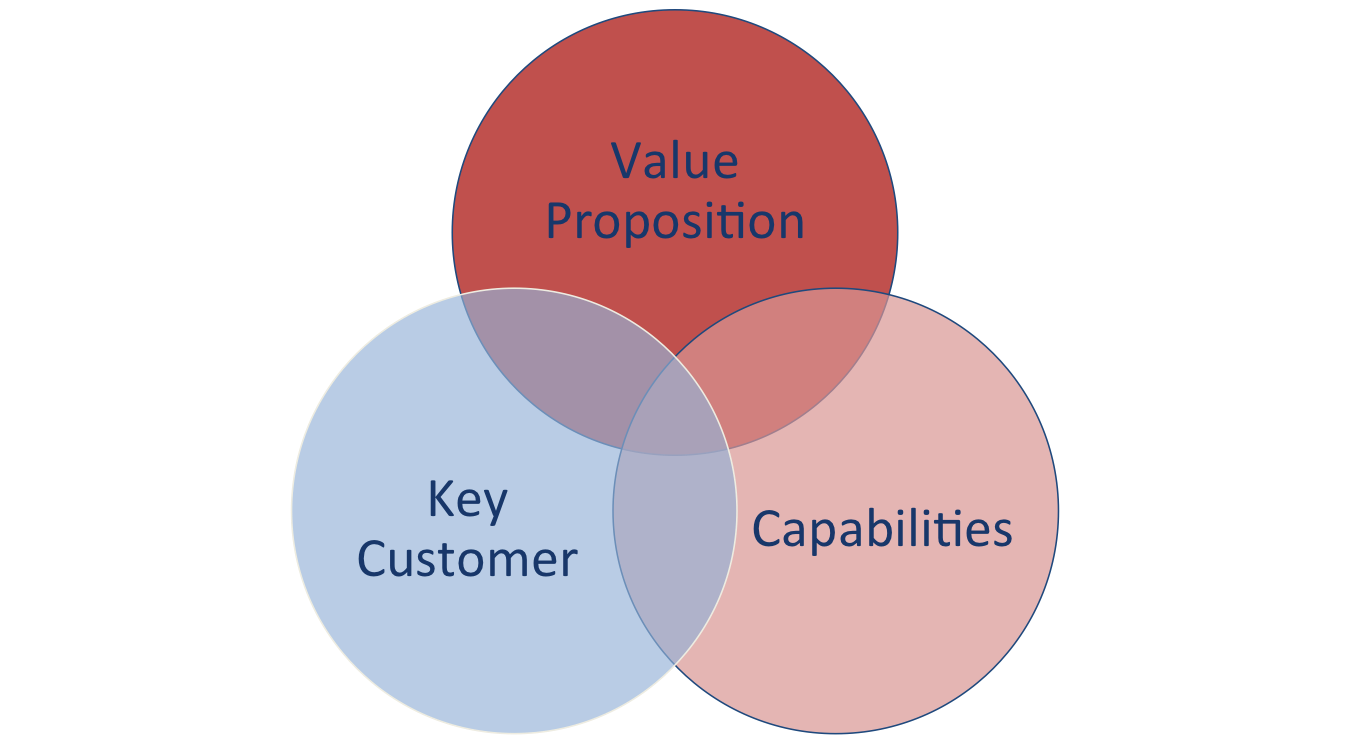
Figure 2: The Business Model
- Outside/In as compared to Inside/Out. One of the critical traits of the new supply leaders are that their focus lies not on the capabilities of the supply chain, but rather on what the key customers want and types of outcomes that they wish to achieve. This is the outside/in perspective, as compared to inside/out, where the leaders understands what their supply chain can and cannot do and then try to convince the customers that this is what they really want. These new leaders have a clear understanding of who their key customers are and what they want. They understand that it is these key customers who drive the firm, its strategy, and ultimately the supply chain. This understanding of and identification with the key customers takes its most immediate form in terms of how communication is implemented – through measures and metrics.
- Effective at communicating with others in terms of performance measurement, measures, and metrics. To effectively communicate within the firm, the new supply chain leader must recognize the importance of measures and metrics as communication. Measures and metrics, as noted by Magrite and Stone (2002), restate the business strategy and the business model into what each group or person must do to achieve this strategy. Increasingly, we are recognizing that effective communication within the firm occurs at this level, not in terms of such measures as capacity, throughput, utilization, and ppm. The new supply chain leader uses these measures to show how the actions of the supply chain can affect how others perform. Furthermore, in many cases, the new supply chain leader takes this emphasis on performance to a new level by adopting the customers’ own measures as their own. When this occurs, communication is immediately enhanced between the supply chain and the customer since both are using the same set of measures. More importantly, supply chain impact can be seen immediately since these actions can be translated into how they affect the performance of the customer. Since both parties are using the same numbers (so to speak), the opportunity for conflict is minimized.
- Recognizes the need for complexity but still strives to identify and eliminate complications. Since the new supply chain leader closely knows and identifies with the key customer, there is an acceptance of the need for complexity. Complexity is a trait that comes from the key customer and it is something that the supply chain must be able to accommodate. The leader does try to communicate the downside risks of complexity through a cost of complexity approach (see Figure 3). However, the leader is able to differentiate between complexity, which comes from the customer, and complication, which occurs because of the actions of people within the supply chain. As an example of a complication, consider the following situation. We have a short term problem with a component supplier. In the short term, we modify the process to accommodate an inspection activity. The problem is eventually addressed but the inspection is not removed. This inspection is an example of a complication – something that plagues most supply chain systems. The new supply chain leader may add complications such as increasing the number of backup suppliers – but these actions are driven by the need to protect the system from disruptions and to improve resilience.
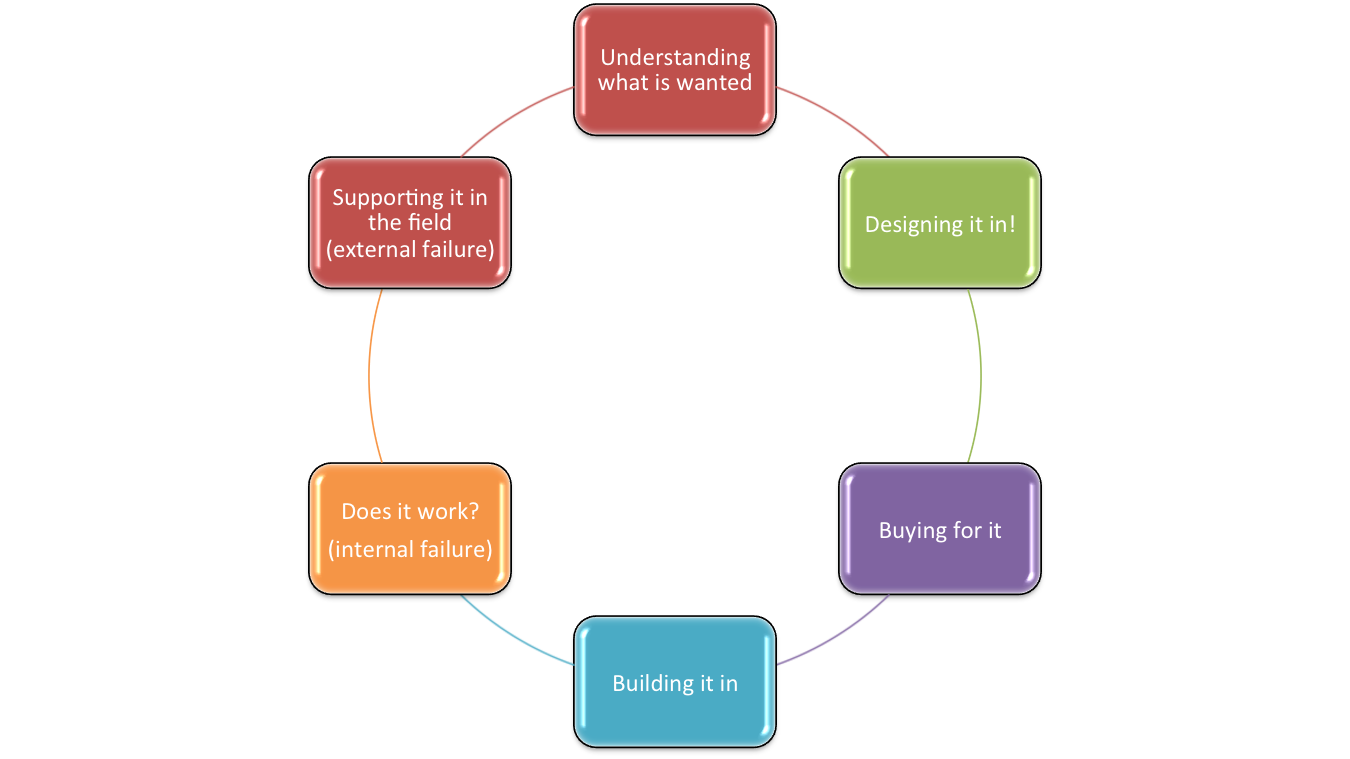
Figure 3: Cost of Complexity – A Total Cost Approach
- Recognizes and accepts the presence of uncertainty and change. This is seen as being the natural state of things – you never have enough time; the information is never complete or sufficiently accurate; something is always changing before you make your decision.
- Strives for robust rather than optimal systems. Optimality is nice. However, in many cases, optimality results in fragile systems. That is, as long as things have not changed from the conditions that were used to derive the optimal solution, you are fine. However, as soon as something changes in the environment, the system cannot cope and it experiences significant deterioration in performance. Consequently, what is wanted is a robust system – it does not generate the best performance but it is able to cope with changes without extracting a severe penalty performance. Robust systems are the natural complement to the preceding trait.
- The focus is on the future. In this new environment of change and uncertainty, the past is viewed as something to learn from, not as a basis for punishment. As one manager in the Beyond the Horizon project put it, “The past is something you cannot do anything about. Learn from it; get over it; focus rather on the future.” That is the attitude assumed by the new supply chain leader. This focus and concern about the past is also reflected in planning. The new supply chain leader recognizes the importance of that basic supply chain dictum – today’s supply chain is a result of investments made in the past; tomorrow’s supply chain will be result of investments made.
- Fast decision-making is the key. In this environment, you do not have the time to wait until changes shake out. Rather, you have to make decisions quickly and be willing to live with the fact that you will be wrong occasionally. This is becoming the natural state of affairs. As one manager put it, “you make decision quickly, you fail last, you learn quickly, you move on.” This was best illustrated by one interview that took place at a fast fashion goods operation located in the Midwest (this was part of the Beyond the Horizon project). The manager who was taking two of the research team members on a plant tour, stopped to point out a new $1.7 million line. He turned to the research team and asked them to guess how long it took to go from problem awareness to the time that this line was up and running. The team members answered with numbers ranging from two to three years. The response – 7 months. When questioned, he brought out the key lesson – if the company had waited to make sure that the issue driving the need for the investment was real, it would have been too late. A new, faster method of decision-making is demanded.
|
Traits |
Traditional Supply Chain Manager |
Strategic Supply Chain Leader |
|
Orientation |
Functional; Strongly Internal |
Cross-boundary; Coordination |
|
Performance Stance |
Cost/cost minimization |
Outcome-driven/revenue maximization |
|
Definition of Excellence
|
Supply Chain Excellence |
Business Excellence |
|
Stance |
Focus on Execution |
Asking the Right Question Making sure the desired outcome is understood and made inevitable |
|
Dealing with the customer |
Inside/Out |
Outside/In |
|
Communication |
Very functionally oriented Capacity, throughput, bottlenecks, inventory, ppm |
Performance Measures and Metrics Use the customer’s metrics as ours. |
Table 1: Comparing Supply Chain Leaders
The Challenge
The evidence is there – there is a need for a new type of supply chain manager – a strategic supply chain manager. The challenge facing the generators of current supply chain talent (i.e., professional societies such as APICS, ISM, CSCMP, firms, and educational institutes at the community college, college, and university levels) is that, for the most part, they are structured and organized to deliver the traditional supply chain manager. While there will still be a demand for such talent, the real talent crisis will involve the strategic supply chain leader. For the most part, the generators of current supply chain talent focus on tools and content. Content, while important for the future supply chain leader, is not enough – it can be viewed as the cost of playing the game. What make the future supply chain leaders so different is their thought process and their approach. They are coordinators and orchestrators; they educate and communicate; they see the supply chain not as capacity but as capabilities (what the supply chain can do well and what it can poorly); they focus on the desired outcomes not the solutions. Finally, they recognize that ultimately the supply chain is strategic, not because it is the best practitioner of lean or Total Quality Management, but because it supports the value proposition and helps the key customers succeed. The challenge for the current generators of supply chain talent is that of developing a system that can create such leaders. However, for those firms and organizations that can meet this challenge, the future is indeed bright!Steven A. Melnyk PhD, is Professor of Operations and Supply Chain Management at Michigan State University. He can be reached at melnyk@msu.edu. For more information, visit broad.msu.edu.
Colin M. Seftel BSc(Eng) CFPIM CSCP, is a trainer and consultant with PSQ and has 20 years hands-on experience as the operations manager with a manufacturer of marine equipment. He can be reached at colins@psq.co.za.
This article is reproduced with the authors' permission.