 |
 |
 |
 |
 |
 |
 |
 Archived Newsletters Archived Newsletters |
 |
 |
| Email: info@psq.co.za Phone: 021 557 2491
|

|
|
|
Newsletter |
Beware of Creating Silos In ERP
by Malcolm Smith CPIM CDDP CSCA
by Malcolm Smith CPIM CDDP CSCA
Does
your company use one of the major software applications like SAP,
Syspro, SAGE or any other system that is designated ERP software? If so
then you are probably aware that your company is using this system to
run almost every aspect of your business. ERP is the acronym for
Enterprise Resource Planning and an ERP system is designed to support
almost every administrative, planning and execution function that needs
to be performed on a daily basis in order to run a business.
For most companies there are two aspects to a business. One is the financial aspect like financing capital equipment, running expenses, and cash flow etc. These are extremely important to the overall health of a company and any ERP system has to be capable and robust enough to handle the challenges that crop up daily.
The second aspect of business is the operational side of things. This covers procurement, warehousing, operations and logistics. Your ERP system must be able to handle all the challenges that each of these functions bring. If your company is already using an ERP system then chances are that everything has already been set up and you are running to some degree of success or challenges.
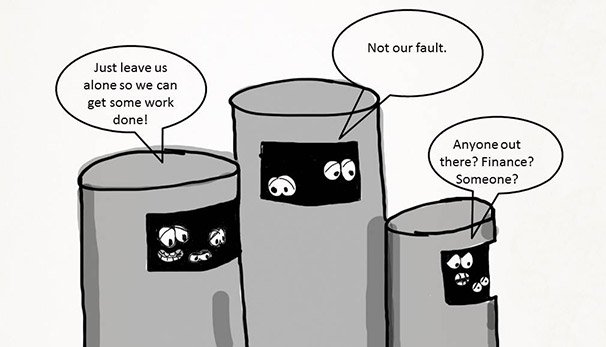
One of these challenges is the tendency of functions within a company to operate in “silos”. The silo effect is created when a business organises itself by department functions. Examples of functions are “purchasing”, “production”, “planning”, “warehousing” etc. The Silo Mentality, as defined by the Business Dictionary, is a mindset present when certain departments or sectors do not wish to share information with others in the same company. This type of mentality will reduce efficiency in the overall operation, reduce morale, and may contribute to the demise of a productive company culture. It arises because each function operates with its own set of goals. Employees do not understand what the needs of other departments are, or that their actions may benefit themselves but could be detrimental to others.
An ERP system is designed to support each functional aspect of a business, but by the nature of its design, may lead to the creation of a silo effect. When the software is set up, access permissions are given to the various functions, which closes most departments off from each other. This is a major obstacle to overcome and the main barrier is a lack of understanding of the responsibilities of each function within a company and why that function is important to the overall success of the business. To overcome this, a business needs to educate its employees about the way the it operates and the importance of each individual functional department to deliver capably and efficiently, but in a co-ordinated and co-operative fashion.
When a culture of understanding is developed and employees are educated and informed to be able to break down the silos and make good business decisions, then a business will start to improve its overall efficiency, productivity and, most importantly, its customer service.
One of the most practical short courses designed to help companies educate their employees about the inner workings of ERP is called The Principles of Production and Inventory Management. Participants learn about strategic planning, sales and operations planning, resource planning and whole host of other topics which are necessary to use ERP effectively. It creates a level of understanding for all the functions in a company of what is expected and how to achieve the expectation.
For most companies there are two aspects to a business. One is the financial aspect like financing capital equipment, running expenses, and cash flow etc. These are extremely important to the overall health of a company and any ERP system has to be capable and robust enough to handle the challenges that crop up daily.
The second aspect of business is the operational side of things. This covers procurement, warehousing, operations and logistics. Your ERP system must be able to handle all the challenges that each of these functions bring. If your company is already using an ERP system then chances are that everything has already been set up and you are running to some degree of success or challenges.
One of these challenges is the tendency of functions within a company to operate in “silos”. The silo effect is created when a business organises itself by department functions. Examples of functions are “purchasing”, “production”, “planning”, “warehousing” etc. The Silo Mentality, as defined by the Business Dictionary, is a mindset present when certain departments or sectors do not wish to share information with others in the same company. This type of mentality will reduce efficiency in the overall operation, reduce morale, and may contribute to the demise of a productive company culture. It arises because each function operates with its own set of goals. Employees do not understand what the needs of other departments are, or that their actions may benefit themselves but could be detrimental to others.
An ERP system is designed to support each functional aspect of a business, but by the nature of its design, may lead to the creation of a silo effect. When the software is set up, access permissions are given to the various functions, which closes most departments off from each other. This is a major obstacle to overcome and the main barrier is a lack of understanding of the responsibilities of each function within a company and why that function is important to the overall success of the business. To overcome this, a business needs to educate its employees about the way the it operates and the importance of each individual functional department to deliver capably and efficiently, but in a co-ordinated and co-operative fashion.
When a culture of understanding is developed and employees are educated and informed to be able to break down the silos and make good business decisions, then a business will start to improve its overall efficiency, productivity and, most importantly, its customer service.
One of the most practical short courses designed to help companies educate their employees about the inner workings of ERP is called The Principles of Production and Inventory Management. Participants learn about strategic planning, sales and operations planning, resource planning and whole host of other topics which are necessary to use ERP effectively. It creates a level of understanding for all the functions in a company of what is expected and how to achieve the expectation.
If you would like to find out more about The Principles of Production and Inventory Management, contact Bill Schneider.